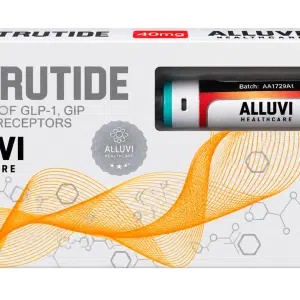
Compound (R&D Only)
Navigating Modern Peptide R&D: A Comprehensive Technical Guide to Alluvi Peptides
The landscape of peptide research continues to evolve at an extraordinary pace. Once considered niche investigative compounds, synthetic peptides have become essential tools for studying metabolic signalling, receptor interactions, cellular repair mechanisms, and complex biological pathways.
For laboratories seeking reproducible, high-quality data, the selection of premium research compounds is critical. High-purity materials, verified analytical testing, and rigorous handling procedures help ensure that experimental outcomes reflect genuine biological responses rather than inconsistencies in compound quality.
This technical guide explores the scientific foundations, research applications, and laboratory best practices associated with leading Alluvi research peptides, including Tirzepatide, Retatrutide, and BPC-157/TB-500 combinations.
> **Research Use Only Notice**
> All compounds discussed in this article are intended exclusively for laboratory research and scientific investigation. They are not approved for human consumption, veterinary use, therapeutic treatment, diagnostic procedures, or agricultural applications.
# Understanding Next-Generation Research Peptides
Modern peptide science focuses on understanding how signalling molecules interact with specific receptors and intracellular pathways. Through advanced synthesis techniques, researchers can investigate highly targeted biological mechanisms with remarkable precision.
In metabolic and regenerative research models, peptide compounds provide valuable insight into:
* Cellular communication pathways
* Energy regulation systems
* Hormonal signalling networks
* Tissue repair mechanisms
* Receptor activation dynamics
* Protein expression responses
The quality of research materials directly influences data reliability. Even minor variations in purity, stability, or molecular identity can introduce unwanted variables into experimental protocols.
For this reason, laboratories increasingly prioritise independently verified, high-purity research compounds supported by comprehensive analytical testing.
# Incretin-Based Metabolic Research
Among the most significant developments in peptide science has been the emergence of incretin-focused research compounds.
These molecules allow researchers to investigate pathways involved in:
* Glucose metabolism
* Lipid utilisation
* Energy expenditure
* Appetite signalling
* Receptor cross-talk
* Neuroendocrine regulation
Two compounds attracting substantial scientific interest are Tirzepatide and Retatrutide.
# Alluvi Tirzepatide: Dual Receptor Agonist Research
Tirzepatide represents an innovative dual-agonist structure designed to activate both:
* Glucose-Dependent Insulinotropic Polypeptide (GIP) receptors
* Glucagon-Like Peptide-1 (GLP-1) receptors
This dual-receptor architecture enables researchers to investigate multiple signalling pathways simultaneously while comparing downstream biological responses against traditional single-pathway models.
## Research Applications
### Baseline Receptor Analysis
Lower-concentration experimental designs can be utilised to evaluate:
* Receptor affinity
* Binding kinetics
* Signal initiation
* Cellular responsiveness
### Extended Exposure Studies
Higher-concentration laboratory models may assist researchers in examining:
* Receptor saturation dynamics
* Signal amplification
* Adaptive cellular responses
* Long-term pathway activation
### Comparative Metabolic Investigation
Tirzepatide provides a valuable framework for comparing dual-pathway activation against conventional GLP-1-focused research compounds.
# Alluvi Retatrutide: Triple Agonist Research Platform
Retatrutide represents the next stage in metabolic peptide development.
Unlike dual agonists, Retatrutide simultaneously targets:
* GIP receptors
* GLP-1 receptors
* Glucagon (GCG) receptors
The addition of glucagon receptor activity creates opportunities for researchers to explore more complex metabolic interactions and energy regulation pathways.
## Areas of Scientific Interest
### Triple Pathway Evaluation
Researchers may investigate how glucagon receptor activation influences:
* Cellular energy expenditure
* Fat oxidation pathways
* Mitochondrial activity
* Metabolic flexibility
### Comparative Assay Development
Side-by-side comparisons between dual and triple agonists may reveal meaningful differences in:
* Receptor signalling intensity
* Cellular adaptation mechanisms
* Lipid metabolism markers
* Gene expression profiles
### Stability Monitoring
Extended laboratory observations can help assess molecular integrity under varying storage and handling conditions.
# Regenerative Research Models: BPC-157 and TB-500
Beyond metabolic research, peptide science continues to investigate cellular repair and regenerative signalling pathways.
Among the most widely studied research compounds are:
* BPC-157
* TB-500 (Thymosin Beta-4 derivative)
When utilised together in laboratory environments, these compounds enable researchers to explore multiple biological repair pathways simultaneously.
# Evaluating Dual-Peptide Research Systems
## Fibroblast Activity Studies
Researchers frequently monitor:
* Fibroblast migration
* Cellular proliferation
* Extracellular matrix production
* Collagen-related responses
These measurements help assess how peptide combinations influence structural repair mechanisms.
## Angiogenesis Research
Laboratories may evaluate markers associated with:
* Vascular development
* Endothelial cell behaviour
* Growth factor expression
* Tissue remodelling processes
Particular attention is often given to Vascular Endothelial Growth Factor (VEGF) activity.
## Synergy Assessment
Researchers commonly compare:
* Individual peptide activity
* Combined peptide activity
* Concentration-dependent responses
* Time-dependent biological effects
Such studies help determine whether simultaneous pathway activation produces distinct cellular outcomes.
# Laboratory Quality Control and Handling Standards
Successful peptide research requires strict adherence to quality assurance procedures.
Every stage of handling can influence compound stability and experimental reproducibility.
## Storage Requirements
| Condition | Recommended Practice | Purpose |
| ——————— | ————————– | —————————– |
| Lyophilised Storage | Approximately -20°C | Preserve long-term stability |
| Reconstituted Storage | 2°C–8°C | Maintain short-term integrity |
| Light Exposure | Minimise exposure | Reduce degradation risk |
| Moisture Control | Store in sealed containers | Protect compound stability |
## Reconstitution Best Practices
To minimise unnecessary stress on delicate peptide structures:
1. Introduce solvent slowly along the vial wall.
2. Allow passive dissolution where possible.
3. Avoid vigorous shaking or vortexing.
4. Use sterile laboratory technique throughout preparation.
Gentle handling helps preserve molecular integrity and reduces the potential for degradation.
## Sterile Laboratory Procedures
Researchers should perform preparation and transfer procedures within controlled laboratory environments whenever possible.
Best practices include:
* Laminar flow hood utilisation
* Sterile transfer equipment
* Controlled environmental conditions
* Contamination prevention protocols
Maintaining sterile conditions supports experimental consistency and analytical accuracy.
# Analytical Verification Standards
Before introducing any research peptide into an assay system, analytical verification should be performed.
Common verification methods include:
## High-Performance Liquid Chromatography (HPLC)
HPLC analysis assists laboratories in evaluating:
* Purity levels
* Impurity profiles
* Batch consistency
* Compound stability
## Mass Spectrometry
Mass spectrometry provides:
* Molecular weight confirmation
* Identity verification
* Structural validation
* Analytical cross-confirmation
## Certificate of Analysis Review
A comprehensive Certificate of Analysis should include:
* Batch identification
* Purity results
* Analytical methodology
* Testing dates
* Quality control documentation
Independent verification remains one of the most effective methods for maintaining confidence in research materials.
# Why Research Quality Matters
Reliable scientific outcomes begin with reliable materials.
High-purity peptide compounds help researchers:
* Reduce experimental variability
* Improve reproducibility
* Increase analytical confidence
* Support data integrity
* Enhance study consistency
As peptide science continues advancing, quality assurance will remain one of the most important foundations of successful laboratory research.
# Conclusion
Peptide research continues to unlock new opportunities across metabolic biology, receptor pharmacology, and regenerative science. Compounds such as Tirzepatide, Retatrutide, and BPC-157/TB-500 combinations provide researchers with sophisticated tools for investigating complex biological systems.
However, meaningful scientific progress depends on more than innovative compounds alone. Analytical verification, purity testing, proper storage, and rigorous laboratory procedures remain essential components of every successful research programme.
By combining high-quality research materials with robust experimental design, laboratories can generate more reliable, reproducible, and scientifically valuable results.
Showing all 3 resultsSorted by average rating
-
Compound (R&D Only)
Alluvi BPC-157 & TB-500 40mg (R & D Only)
Price range: £ 100.00 through £ 700.00Select options This product has multiple variants. The options may be chosen on the product pageClear10 Boxes (Save 30%)3 Boxes (Save 25%)1 Box -
Compound (R&D Only)
Alluvi Retatrutide 40mg peptide (R and D Only)
Price range: £ 150.00 through £ 1,050.00Select options This product has multiple variants. The options may be chosen on the product pageClear3 Boxes (Save 24%)10 Boxes (Save 30%)1 Box