Retatrutide Research
The Vanguard of Metabolic Science: Unpacking the Frontiers of Retatrutide Research
Let’s face it: metabolic medicine has been moving at an absolute breakneck pace over the last decade. It wasn’t too long ago that the scientific community viewed weight management and type 2 diabetes through a relatively narrow lens, relying primarily on single-pathway interventions that often felt like trying to fix a complex engine with a single wrench. But things have changed—and fast. The landscape shifted dramatically with the introduction of selective incretin mimetics, throwing the door wide open to an entirely new era of biochemistry.
Now, sitting right at the cutting edge of this therapeutic revolution is a fascinating compound that’s turning heads across global laboratories: retatrutide. If you’ve been keeping even a casual eye on recent peptide research, you’ve likely heard the buzz surrounding this novel molecule. Known in laboratory settings by its developmental codename LY3437943, this single-peptide powerhouse doesn’t just replicate what came before; it breaks entirely new ground by simultaneously targeting three distinct metabolic receptors.
This deep dive uncovers the foundational science, cellular architecture, and clinical outcomes defining modern retatrutide research. Whether you’re a molecular biologist mapping receptor affinities or a clinical researcher looking at the next wave of weight management solutions, parsing out the exact mechanics of this triple agonist peptide is absolutely vital. Let’s roll up our sleeves and explore what makes this molecule a true game-changer.
What Is Retatrutide?
To truly appreciate where retatrutide research is headed, we first need to pinpoint exactly what this molecule is at a structural level. At its core, the retatrutide peptide is a synthetic, modified 39-amino acid single peptide chain. But don’t let the word “single” fool you; its structural engineering is remarkably intricate.
Engineered by the scientists at Eli Lilly and Company, retatrutide is specifically tailored to act as a unimolecular multi-receptor agonist. This means that instead of mixing different peptides together in a cocktail, a single molecular sequence is structurally optimized to bind cleanly to three entirely different endogenous hormone receptors.
To give it the structural stability and pharmacokinetic longevity required for a viable weekly dosing profile, researchers integrated a specific C20 fatty diacid moiety into its backbone. This structural modification allows the peptide to bind reversibly to bovine/human albumin, dramatically slowing down its metabolic clearance and extending its half-life to approximately 6 days. Without this engineering cleverness, the body’s native enzymes—specifically dipeptidyl peptidase-4 (DPP-4)—would chew up the peptide within minutes.
History of Retatrutide Research
The road toward triple receptor agonism didn’t happen overnight. In fact, it’s a textbook story of incremental scientific triumph, building steadily on decades of incretin research.
To understand the chronology, we have to look back at the late 20th century when researchers discovered Glucagon-Like Peptide-1 (GLP-1) and Glucose-Dependent Insulinotropic Polypeptide (GIP). These natural gut hormones, collectively known as incretins, are secreted in response to nutrient intake and play a massive role in stimulating insulin secretion in a glucose-dependent manner.
-
The Single-Agonist Era: Early therapeutic efforts focused squarely on GLP-1. This led to the discovery and approval of foundational peptides like exenatide, liraglutide, and eventually, the highly successful semaglutide. These agents proved beyond a shadow of a doubt that targeting gut-brain axis pathways could radically alter satiety and glycemic control.
-
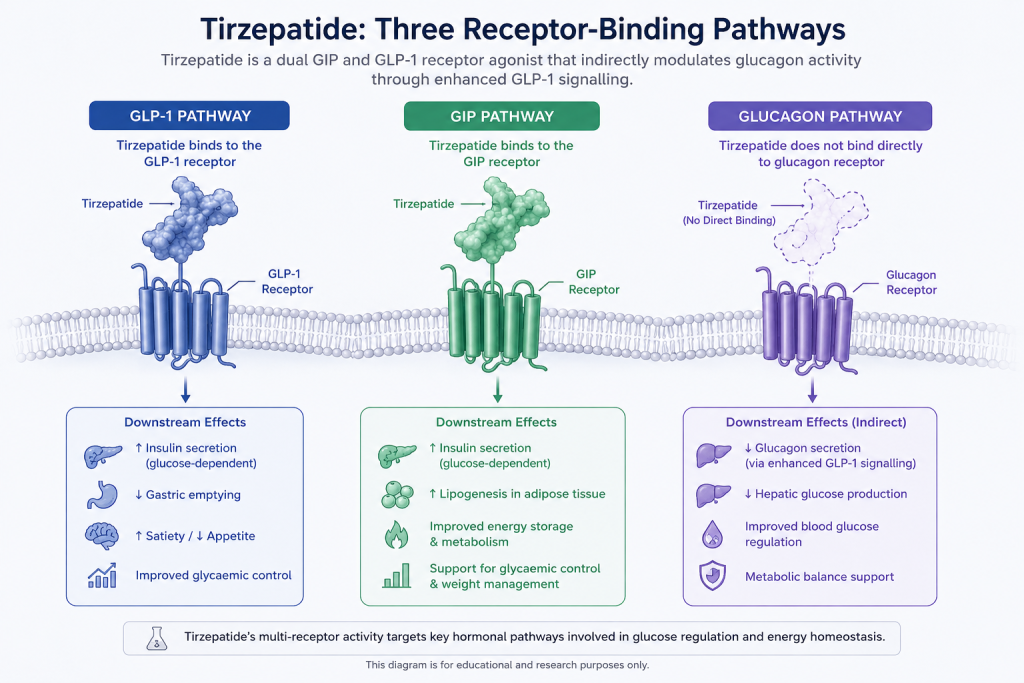
The Dual-Agonist Breakthrough: Despite the success of single-target mimetics, nature rarely relies on just one pathway. Realizing that single-receptor activation hit an eventual efficacy ceiling, researchers turned their attention to co-agonism. By combining GLP-1 and GIP receptor activation into a single molecule, scientists engineered tirzepatide. The synergistic impact of dual-pathway activation dramatically outpaced what single agonists could achieve, setting a new benchmark for metabolic improvements.
-
The Dawn of the Triple Agonist: But why stop at two? Preclinical models suggested that adding a third pillar—glucagon receptor activation—could balance out energy intake with accelerated energy expenditure. This realization directly birthed the timeline of retatrutide studies, moving rapidly from early in vitro receptor binding assays to Phase 1 human tolerability evaluations, and finally into the robust Phase 2 and Phase 3 clinical frameworks that are redefining the field today.
Understanding Triple Agonists
Why exactly are researchers so incredibly excited about a triple agonist peptide? To get a clear picture, we have to understand the inherent limitations of conventional metabolic therapies. When a research model undergoes significant caloric restriction, the body’s homeostatic defense mechanisms quickly kick into high gear. The metabolic rate slows down, energy expenditure drops, and hormonal signals screaming for food intake spike significantly. It’s a physiological survival mechanism designed to prevent starvation, but it acts as a massive roadblock for long-term weight management.
A triple agonist peptide like retatrutide elegantly bypasses this roadblock by orchestrating a highly synchronized, multi-pronged physiological response. It effectively pulls three distinct metabolic levers at the exact same time:
-
Satiety Amplification: It directly influences central nervous system pathways to suppress appetite and prolong the physical sensation of fullness.
-
Insulinotropic Optimization: It refines pancreatic response, ensuring that insulin is secreted efficiently when glucose levels rise, while simultaneously protecting pancreatic beta-cell health.
-
Thermogenic Mobilization: Unlike traditional approaches that merely reduce energy coming in, triple agonism actively upregulates energy going out by stimulating fat oxidation and heat production at the cellular level.
By coordinating these three distinct physiological vectors simultaneously, triple receptor agonists prevent the typical compensatory metabolic slowdown that frequently stalls single-pathway protocols.
Mechanism of Action
The precise retatrutide mechanism relies entirely on its carefully tuned, asymmetrical affinity profile across its three target receptors. Interestingly, it isn’t an equal split. Retatrutide is explicitly designed to show differing potencies when compared to the native, human endogenous hormones.
According to molecular pharmacology data, retatrutide exhibits:
-
An over-indexed potency at the human GIP receptor (roughly 8.9-fold more potent than native GIP).
-
A balanced, slightly attenuated potency at both the human GLP-1 and glucagon (GCG) receptors (approximately 0.4-fold and 0.3-fold of the native ligands, respectively).
This precise calibration is crucial. If the glucagon or GLP-1 component were too intense, the risk of severe gastrointestinal distress or excessive glycogenolysis would spike through the roof. By tuning the GIP component to handle the heavy lifting and utilizing GLP-1 and glucagon as highly calculated synergetic drivers, the molecule achieves maximum metabolic impact with an acceptable tolerability profile.
Let’s break down exactly what happens when these three individual pathways light up simultaneously within a biological system:
1. The GIP Component (The Metabolic Workhorse)
Glucose-Dependent Insulinotropic Polypeptide receptors are highly concentrated in both pancreatic beta cells and adipose (fat) tissue. By highly activating this receptor, retatrutide significantly boosts the first-phase insulin response when blood sugar levels are elevated. Furthermore, GIP receptor activation appears to modulate white adipose tissue metabolism directly, facilitating healthier fat storage, reducing systemic inflammation, and acting as a vital buffer against the gastrointestinal side effects typically triggered by raw GLP-1 stimulation.
2. The GLP-1 Component (The Satiety Driver)
Glucagon-Like Peptide-1 receptors reside primarily in the gastrointestinal tract and reward-related centers of the brain (such as the hypothalamus and brain stem). When retatrutide binds to these receptors, it safely delays gastric emptying, signaling to the brain that nutrients are present and dramatically suppressing chemical hunger cues. Peripheral GLP-1 activation also downregulates systemic macrophage activity, leading to a marked decrease in chronic, obesity-related low-grade inflammation.
3. The Glucagon Component (The Thermogenic Accelerator)
This is the secret weapon that separates retatrutide from its predecessors. Glucagon is traditionally thought of simply as a hormone that raises blood sugar when you’re hypoglycemic. However, when properly balanced alongside incretin mimetics, glucagon receptor activation acts as a major driver of energy expenditure. It binds directly to receptors in the liver, stimulating lipolysis (the breakdown of stored fats) and increasing mitochondrial fatty acid oxidation. This process elevates the resting metabolic rate, forcing the system to utilize stored lipids as its primary energy substrate.
Scientific Studies and Findings
The scientific community doesn’t just rely on elegant theories; it demands rigorous, double-blind, empirical data. Fortunately, the published literature on retatrutide has provided exactly that, showcasing some of the most profound data ever recorded in metabolic clinical trial history.
The Landmark Phase 2 Clinical Trial Data
Published in the New England Journal of Medicine (Jastreboff et al.), the landmark 48-week Phase 2 randomized, double-blind, placebo-controlled trial evaluated retatrutide across a cohort of 338 adults living with obesity. Participants were split into varying weekly dosage tiers (1 mg, 4 mg, 8 mg, and 12 mg) alongside a placebo control group.
The final data points revealed an unmistakably clear, dose-dependent trajectory:
| Dosage Group |
Mean Weight Reduction at 24 Weeks |
Mean Weight Reduction at 48 Weeks |
Percentage of Cohort Achieving ≥15% Loss |
| Placebo Control |
-1.6% |
-2.1% |
2.0% |
| Retatrutide 1 mg |
-7.2% |
-8.7% |
~10.0% |
| Retatrutide 4 mg |
-12.9% |
-17.1% |
60.0% |
| Retatrutide 8 mg |
-17.3% |
-22.8% |
75.0% |
| Retatrutide 12 mg |
-17.5% |
-24.2% |
83.0% |
The Moving Horizon: Phase 3 TRIUMPH Trials
Building directly on those eye-opening Phase 2 findings, the comprehensive Phase 3 TRIUMPH clinical trial program kicked off globally to evaluate long-term outcomes, safety profiles, and cardiovascular impacts across thousands of diverse participants.
Recent data updates from these multi-center trials have confirmed that when extended out to 68 and 80 weeks, the 12 mg maximum dose trajectory yielded an unprecedented average body weight reduction of up to 28.3% to 30.3% in completing cohorts with a starting BMI of 35 or higher. To put that in perspective, those numbers actively close the gap between traditional pharmacological options and invasive bariatric surgeries.
Weight Management Research Applications
When analyzing these massive weight loss numbers, a critical question arises within weight management research: What kind of weight is actually being lost? Historically, rapid, massive weight loss has carried a major caveat—the concurrent loss of critical lean skeletal muscle mass.
Advanced body composition tracking via DXA scans in modern retatrutide studies indicates that the vast majority of the weight shed (often upwards of 80-85%) comes directly from adipose tissue, specifically targeting dangerous visceral fat surrounding vital abdominal organs. This is where the GIP/glucagon synergy shines; by directly mobilizing fatty acids for fuel while maintaining overall metabolic integrity, the peptide helps protect lean tissue when combined with appropriate structural amino acid intake and resistance exercise models.
Beyond simple cosmetic or structural scale weight reductions, retatrutide application consistently yields sweeping improvements across a wide array of metabolic biomarkers:
-
Cardiovascular Biomarkers: Systolic and diastolic blood pressure levels show marked, sustained reductions (averaging a drop of up to 9.88 mm Hg systolic in meta-analyses).
-
Lipid Profile Reconfiguration: Total cholesterol, low-density lipoproteins (LDL), and circulating triglycerides plummet significantly, while high-density lipoproteins (HDL) see a protective, upward trend.
-
Hepatic Fat Reversal: In dedicated substudies focusing on Metabolic Dysfunction-Associated Steatotic Liver Disease (MASLD), retatrutide administration resulted in an astronomical reduction in liver fat content, with a stunning percentage of participants completely reversing their hepatic steatosis within a single year of therapy.
To help visualize how these different peptide generations stack up against each other across key clinical vectors, try playing with the interactive comparative model below.
| Receptor Target |
Activation |
Clinical Function |
| GLP-1 |
Potent |
Insulin secretion & Satiety |
| GIP |
None |
Adipose metabolism & Nausea reduction |
| Glucagon |
None |
Energy expenditure & Thermogenesis |
Comparison With Other Research Peptides
To fully clarify where retatrutide fits in the broader context of peptide science, it helps to view it alongside the foundational tools of the trade. Let’s stack them up side by side.
Retatrutide vs. Semaglutide
Semaglutide is a highly effective, pure, single-receptor GLP-1 agonist. It relies heavily on delaying stomach emptying and altering central nervous system hunger pathways to reduce calorie intake. While it delivers excellent glycemic control and reliable weight management, it only pulls one single lever. Retatrutide, by adding both GIP and glucagon activation, addresses metabolic rate and lipid clearance directly, regularly demonstrating nearly double the average total body weight loss percentage observed in separate semaglutide clinical trials.
Retatrutide vs. Tirzepatide
Tirzepatide was the first molecule to show us the immense power of co-agonism by linking GLP-1 and GIP activation. It completely transformed our understanding of how dual-hormone synergy could improve insulin sensitivity and boost fat clearance. Retatrutide takes that exact dual-agonist foundation and stacks a third layer—glucagon receptor activation—right on top. This added glucagon component turns up the body’s baseline energy expenditure, meaning retatrutide can aggressively drive fat oxidation even as caloric intake naturally drops.
Future Research Directions
As incredible as the current clinical data looks, the exploration of this molecule is still in its early chapters. The future of retatrutide research is branching out into highly fascinating, non-traditional therapeutic arenas:
-
Cardiovascular and Renoprotective Outcomes: Massive, multi-year clinical endpoints trials are actively running to see if triple agonism can fundamentally lower the rates of major adverse cardiovascular events (MACE), slow down chronic kidney disease progression, and mitigate heart failure risks over long horizons.
-
Neurodegenerative Exploration: Given that both GLP-1 and GIP receptors are widely expressed within the human brain, and have shown neuroprotective, anti-inflammatory properties in preclinical models, researchers are beginning to investigate whether multi-agonists could alter the neuroinflammatory cascades seen in conditions like Alzheimer’s and Parkinson’s disease.
-
Sleep Apnea Resolving Power: Severe obesity is inextricably linked with obstructive sleep apnea (OSA). By aggressively reducing mechanical visceral neck fat and rebalancing systemic respiratory drive, ongoing trials are looking to quantify how effectively retatrutide therapy can eliminate nocturnal airway collapses.
Frequently Asked Questions
What exactly is the main difference between retatrutide and tirzepatide?
The major distinction lies directly in the number of targeted metabolic pathways. While tirzepatide is a dual agonist targeting only GIP and GLP-1 receptors, retatrutide is a triple agonist that targets GIP, GLP-1, and glucagon receptors simultaneously, adding an extra layer of energy expenditure acceleration.
How does the glucagon component in retatrutide avoid raising blood sugar?
That’s the beauty of intelligent molecular design. Glucagon alone can prompt the liver to release stored glucose. However, when it’s tightly co-infused alongside highly potent GIP and GLP-1 agonists, those two incretin pathways completely override glucagon’s hepatic glucose output tendencies, forcing the body to benefit solely from its fat-burning and energy-expending properties.
What are the most common side effects observed in retatrutide studies?
True to its lineage as an incretin mimetic, the most frequent side effects are gastrointestinal in nature. Participants commonly report mild-to-moderate nausea, occasional diarrhea, vomiting, or constipation. These effects typically appear during the initial dose-escalation phase and level off significantly once a stable maintenance dose is established.
Is retatrutide currently approved for widespread clinical use by regulatory agencies?
No, as of mid-2026, retatrutide remains an investigational compound undergoing rigorous Phase 3 clinical evaluation. It has not yet been formally submitted to or approved by global regulatory authorities like the US FDA or the UK MHRA for commercial prescription access.
Supporting Material
For a deeper look into the evolving world of metabolic peptide science, explore our curated research modules:
-
Peptide Research and Science: Discover how modified amino acid sequences are rewriting modern pharmacology.
-
Weight Management Research: Read about the cellular mechanisms behind adipose tissue regulation and energy homeostasis.
-
Comparisons and Reviews: Explore our side-by-side breakdowns of emerging multi-receptor agonists.
-
FAQs and Expert Insights: Read direct interviews with leading endocrinology and biochemistry researchers.
Supporting Documentation
-
Retatrutide vs. Tirzepatide: A deep molecular dive into dual vs. triple receptor binding profiles.
-
Retatrutide vs. Semaglutide: Charting the evolution from single-agonist therapies to the triple-receptor frontier.
-
Retatrutide Timeline: Tracking the development of LY3437943 from initial in vitro discovery to present-day Phase 3 trials.
-
Triple Agonist Research: Unpacking the fundamental biochemistry of multi-targeted unimolecular peptides.
-
Future of Retatrutide Research: A comprehensive look at upcoming trials focused on cardiorenal health, MASLD reversal, and extended longevity metrics.
Conclusion
When you look closely at the sheer volume of data generated by modern retatrutide research, it becomes clear that we’re witnessing a major paradigm shift in metabolic medicine. By elegantly weaving three distinct endocrine pathways into a single molecular structure, this triple agonist peptide does more than just push past the limits of older single-target options—it fundamentally redefines how we treat complex metabolic conditions.
The journey from early laboratory concepts to the record-breaking weight loss and liver fat clearance seen in recent trials highlights the incredible power of targeted peptide engineering. As the Phase 3 TRIUMPH trials continue to mature, the data will help clarify the long-term safety, cardiorenal benefits, and structural impact of this molecule.
While there are still plenty of regulatory milestones to cross, retatrutide has firmly established itself as a cornerstone of next-generation peptide science. It offers a fascinating window into a future where metabolic therapy isn’t just about managing symptoms, but about deeply tuning the body’s cellular machinery for total health optimization.