Peptide Quality Standards UK: Testing, Purity and Laboratory Verification
Introduction
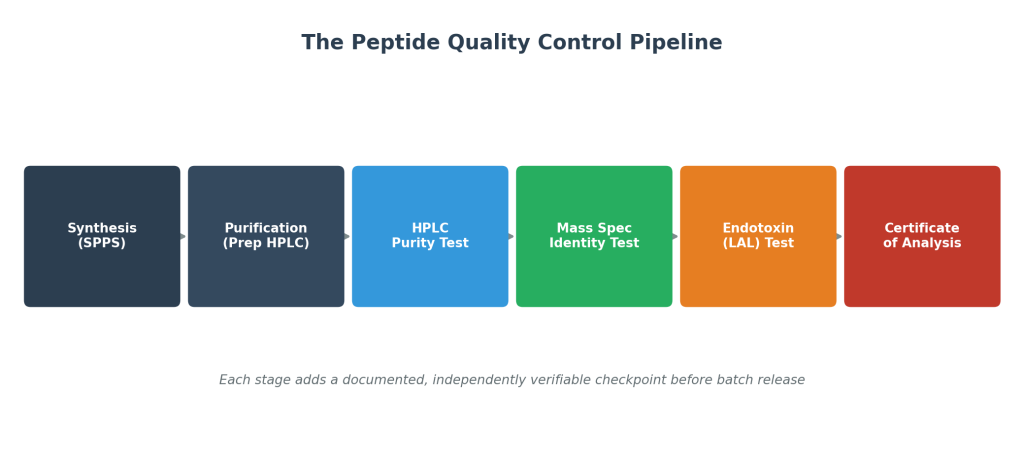
Peptide quality standards play a critical role in research and laboratory applications. Whether evaluating peptide purity, reviewing analytical reports, or assessing supplier documentation, understanding laboratory verification methods helps ensure consistency and reliability. Modern peptide testing procedures utilise advanced analytical techniques to verify identity, purity, stability, and overall product quality.
This guide explains the key aspects of peptide quality standards, including HPLC testing, mass spectrometry, Certificates of Analysis, laboratory quality control procedures, and storage requirements.
Why Quality Standards Matter
Research outcomes depend heavily on material quality. Even minor impurities can influence experimental results, making robust quality standards essential.
Key benefits include:
Improved research consistency
Better reproducibility
Reduced contamination risks
Enhanced data reliability
Greater confidence in laboratory findings
Reliable research peptide standards provide a framework for evaluating products before they are used in scientific studies.
Understanding HPLC Testing
High-Performance Liquid Chromatography (HPLC) is one of the most widely used analytical methods in peptide testing.
HPLC testing separates compounds within a sample, allowing laboratories to determine purity levels accurately.
What HPLC Reveals
Peptide purity percentage
Presence of impurities
Batch consistency
Quality verification
A typical chromatogram displays individual peaks representing compounds detected within the sample. Higher purity peptides generally show a dominant primary peak with minimal secondary peaks.
Supporting Article: HPLC Testing Explained
Mass Spectrometry Testing
Mass spectrometry is frequently used alongside HPLC analysis.
This analytical method measures molecular mass and confirms peptide identity by comparing detected molecular weights with expected values.
Benefits of Mass Spectrometry
Identity confirmation
Molecular weight verification
Detection of contaminants
Additional quality assurance
Together, HPLC and mass spectrometry provide comprehensive analytical verification.
Supporting Article: Mass Spectrometry Overview
Certificate of Analysis Explained
A Certificate of Analysis (COA) is one of the most important quality documents available for research peptides.
A properly prepared COA typically includes:
Product name
Batch number
Manufacturing date
Purity results
Testing methods
Laboratory verification data
Storage recommendations
Researchers should review every COA carefully before purchasing or utilising peptide products.
Supporting Article: Understanding COAs
Purity Verification
Purity verification involves confirming that the peptide matches established specifications.
Laboratories generally evaluate:
Chemical purity
Molecular identity
Batch consistency
Stability characteristics
While many research peptides exceed 95% purity, acceptable thresholds vary depending on intended research applications.
Proper purity verification helps minimise variables that could affect experimental outcomes.
Supporting Article: Peptide Purity Guide
Laboratory Quality Control
Laboratory quality control procedures help maintain consistency throughout testing and verification processes.
Common quality control measures include:
Raw Material Inspection
Incoming materials are evaluated before production or analysis.
Equipment Calibration
Analytical instruments require routine calibration to ensure accurate measurements.
Batch Testing
Each batch undergoes analytical review to confirm compliance with established standards.
Documentation Control
Accurate records support traceability and regulatory compliance.
Strong laboratory quality control systems are essential for maintaining dependable research peptide standards.
Storage and Stability Standards
Even highly purified peptides can degrade if stored improperly.
Recommended storage practices typically include:
Protection from moisture
Limited exposure to light
Controlled temperature conditions
Secure packaging
Long-term stability often depends on peptide structure and formulation.
Researchers should always follow storage recommendations provided within the Certificate of Analysis.
Supporting Article: Storage and Stability Guide
Identifying Reliable Suppliers
Choosing reliable suppliers is a vital component of quality assurance.
Consider the following factors:
Transparent Testing Documentation
Reputable suppliers provide accessible laboratory reports and Certificates of Analysis.
Third-Party Verification
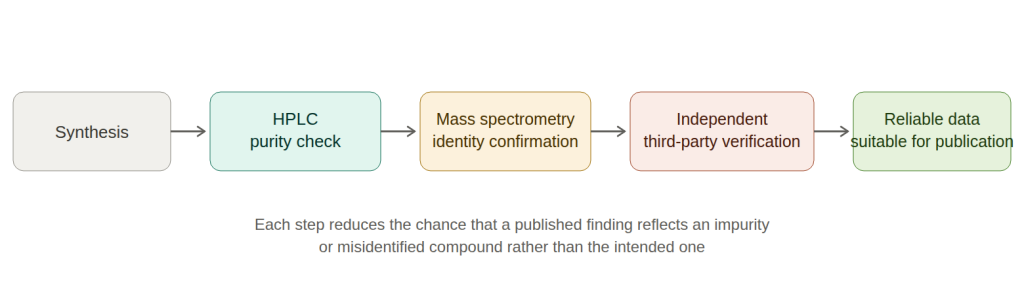
Independent testing can provide additional confidence in analytical results.
Consistent Quality Standards
Suppliers should maintain documented laboratory quality control procedures.
Educational Resources
Quality-focused suppliers often publish research guides and technical documentation that support informed decision-making.
Read More: How to Verify Research Products
Laboratory verification using HPLC and analytical testing helps confirm peptide purity and quality standards.
Frequently Asked Questions
What are peptide quality standards?
Peptide quality standards are procedures and testing methods used to verify purity, identity, stability, and consistency.
Why is HPLC testing important?
HPLC testing helps determine peptide purity and identify potential impurities within a sample.
What does a Certificate of Analysis show?
A COA provides testing results, batch information, analytical methods, and quality verification data.
Is mass spectrometry necessary?
Mass spectrometry provides identity confirmation and complements HPLC purity testing.
How can researchers verify product quality?
Researchers should review COAs, evaluate laboratory testing documentation, assess supplier transparency, and verify analytical methods.
Conclusion
Understanding peptide quality standards is essential for evaluating research materials effectively. Through HPLC testing, mass spectrometry analysis, purity verification, and rigorous laboratory quality control procedures, researchers can better assess product quality and consistency. Careful review of Certificates of Analysis, storage requirements, and supplier verification practices further supports reliable scientific research outcomes.
Peptide Purity Testing: Why It Matters More Than You Think A vial labelled “99% pure” tells you almost nothing on its own. Purity claims are only as good as the testing behind them and in the research peptide market, the gap between a rigorous Certificate of Analysis and a document designed to look convincing without
Peptide Research verification When a study reports a finding about a peptide compound, that result is only as reliable as the material that was actually tested. If a batch used in a trial is impure, misidentified, or inconsistent between production runs, the resulting data becomes difficult to interpret — and difficult for other researchers to