Comparisons and Reviews
Retatrutide vs Tirzepatide vs Semaglutide: Complete Research Comparison Guide (2026)
Introduction: Understanding the Rise of Metabolic Research Peptides
In recent years, incretin-based research peptides have become a major focus in metabolic science. Compounds such as entity[“medication”,”Semaglutide”,”GLP-1 receptor agonist used in metabolic research and type 2 diabetes studies”], entity[“medication”,”Tirzepatide”,”dual GIP and GLP-1 receptor agonist studied for metabolic regulation”], and the emerging entity[“medication”,”Retatrutide”,”triple agonist targeting GLP-1, GIP, and glucagon receptors in research”] are at the forefront of scientific investigation.
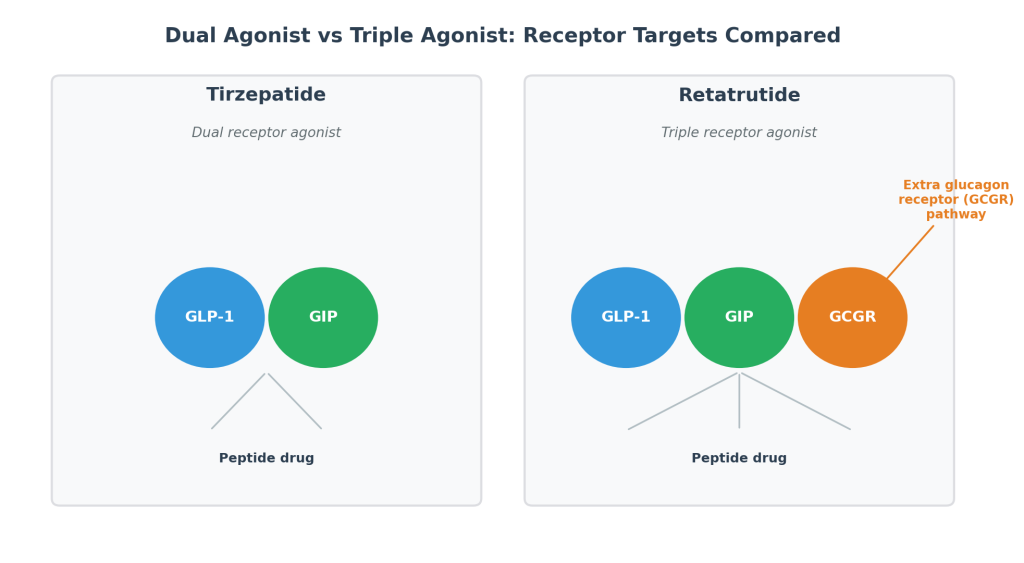
1. Retatrutide vs Tirzepatide
Mechanism of Action
- Retatrutide: Triple agonist (GLP-1 + GIP + glucagon receptors)
- Tirzepatide: Dual agonist (GIP + GLP-1 receptors)
Key Research Differences
Retatrutide introduces an additional glucagon receptor pathway, making it scientifically distinct in mechanism complexity. Tirzepatide, while dual-acting, has already been extensively studied in metabolic research contexts.
Core Comparison Summary
- Retatrutide = broader receptor activity (triple pathway)
- Tirzepatide = established dual incretin modulation
- Retatrutide = newer investigational compound
- Tirzepatide = more mature clinical research base
Scientific Insight
From a research perspective, multi-agonist peptides are being explored for their potential to influence energy balance through multiple hormonal pathways simultaneously. However, long-term comparative data remains limited for newer compounds like Retatrutide.
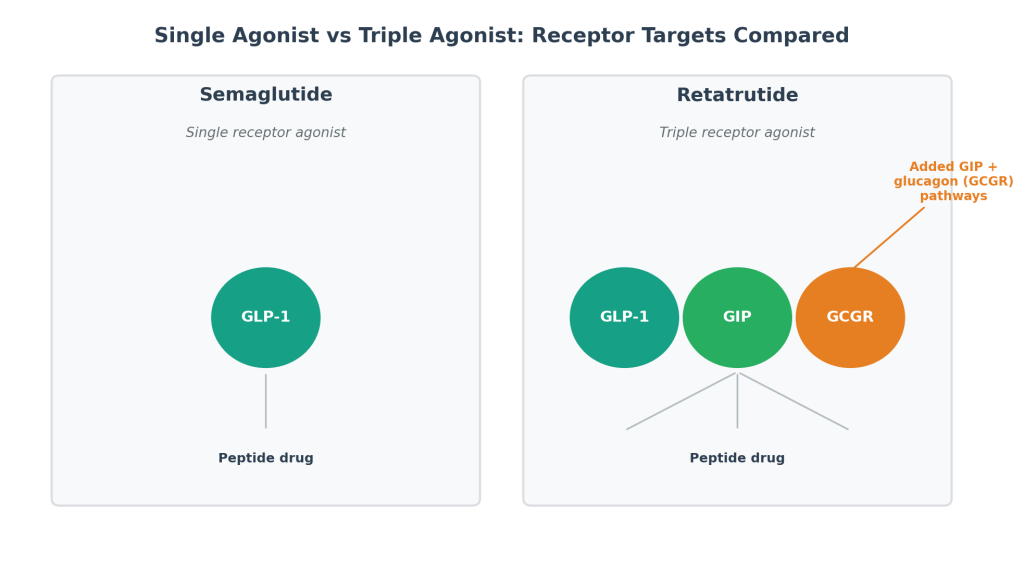
2. Retatrutide vs Semaglutide
Mechanism Differences
- Semaglutide: GLP-1 receptor agonist only
- Retatrutide: triple receptor agonist (GLP-1 + GIP + glucagon)
Research Comparison
entity[“medication”,”Semaglutide”,”GLP-1 receptor agonist used in metabolic and glycaemic research”] has been widely studied and serves as a foundational GLP-1 model compound.
In contrast, entity[“medication”,”Retatrutide”,”investigational triple agonist peptide used in metabolic pathway research”] expands beyond GLP-1 alone, incorporating multiple endocrine pathways.
Key Takeaways
- Semaglutide = single-pathway GLP-1 focus
- Retatrutide = multi-pathway experimental model
- Semaglutide = extensive clinical evidence base
- Retatrutide = early-stage comparative research
3. Research Peptide Comparisons (Framework Overview)
When comparing research peptides, evaluation typically focuses on:
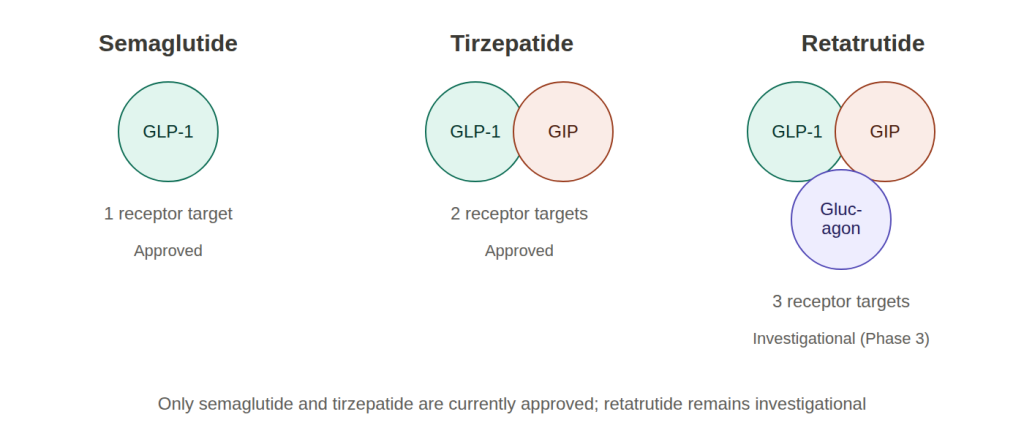
A. Receptor Targets
- GLP-1 only (single pathway)
- Dual agonists (GLP-1 + GIP)
- Triple agonists (GLP-1 + GIP + glucagon)
B. Research Maturity
- Established compounds (extensive studies)
- Emerging peptides (limited peer-reviewed data)
C. Stability & Structure
- Amino acid modifications
- Half-life extension technologies
- Binding affinity differences
D. Study Context
Research peptides should only be evaluated in controlled laboratory or academic environments.
4. Peptide Supplier Evaluation Guide (Critical E-E-A-T Section)
Choosing a research peptide supplier requires strict evaluation standards to ensure scientific integrity.
A. Quality Indicators
- Batch testing transparency
- Certificate of Analysis (CoA)
- Third-party verification
- Clear labelling and traceability
B. Safety & Compliance Signals
- Proper research-use-only disclaimers
- Regulatory alignment (UK/EU chemical handling standards)
- Transparent sourcing documentation
C. Red Flags
- No lab testing data
- Unrealistic purity claims
- Missing documentation
- Lack of traceability
D. Alluvi Peptide UK Standard
At Alluvi Peptide UK, educational content is aligned with:
- scientific transparency principles
- research-only classification
- evidence-based peptide discussion
- compliance-focused information structure
5. Product Format Comparisons (Research Context)
Peptides and research compounds may be presented in multiple formats depending on laboratory requirements:
Lyophilised Powder
- Most stable form for storage
- Requires reconstitution before research use
Solution Form
- Pre-dissolved compounds
- Reduced preparation time
Research Kits
- Bundled accessories for controlled laboratory workflows
- Used in structured experimental environments
Each format is designed for specific research conditions and stability requirements.
6. Scientific Summary: Key Takeaways
- entity[“medication”,”Semaglutide”,”GLP-1 receptor agonist used as a benchmark compound in metabolic research”] represents the foundational GLP-1 model
- entity[“medication”,”Tirzepatide”,”dual incretin receptor agonist studied for metabolic regulation”] expands into dual-pathway research
- entity[“medication”,”Retatrutide”,”triple receptor agonist under investigation in metabolic science”] represents the next-generation multi-pathway concept
The scientific landscape is evolving toward multi-target peptide systems, but comparative long-term data remains an active area of research.
7. Educational Disclaimer (E-E-A-T Compliance)
This article is intended strictly for educational and informational purposes only.
It does not promote, instruct, or encourage any medical use. Research peptides discussed are for laboratory and scientific study only, where legally permitted.
FAQs
What is the difference between Retatrutide, Tirzepatide, and Semaglutide?
The main difference is the number of receptor pathways they target.
-
Semaglutide targets only GLP-1 receptors
-
Tirzepatide targets GLP-1 and GIP
-
Retatrutide targets three metabolic pathways
Is Retatrutide stronger than Tirzepatide or Semaglutide?
From a research perspective, “stronger” is not a scientific classification. Retatrutide is simply more complex in receptor activity (triple agonist), while Tirzepatide is dual-acting and Semaglutide is single-pathway. Comparative effectiveness depends on study design and endpoints.
Is Semaglutide still relevant in research compared to newer peptides?
Yes. Semaglutide remains one of the most extensively studied GLP-1 receptor agonists and is often used as a baseline compound in metabolic research due to its large clinical evidence base.
Why are multi-agonist peptides becoming more popular in research?
Multi-agonist peptides are being studied because they may interact with multiple metabolic pathways at once (GLP-1, GIP, glucagon). This allows researchers to explore broader hormonal responses compared to single-target compounds.
What makes Tirzepatide different from Semaglutide?
Tirzepatide activates both GIP and GLP-1 receptors, whereas Semaglutide only targets GLP-1. This dual mechanism is the key distinction in research comparisons.
What is Retatrutide used for in scientific research?
Retatrutide is currently investigated as a triple-receptor agonist in metabolic pathway research. It is studied for its potential effects on GLP-1, GIP, and glucagon signaling pathways.
How do I evaluate a peptide supplier?
Key evaluation criteria include:
Are research peptides legal in the UK?
Research peptides are generally classified for laboratory research use only. Legal status depends on intended use, compliance labeling, and regulatory classification. They are not approved for human consumption outside regulated contexts.
What is the safest peptide format for research use?
Common formats include:
-
Lyophilised powder (most stable for storage)
-
Liquid solutions (pre-mixed for convenience)
-
Research kits (bundled lab-use systems)
Why is Tirzepatide considered a breakthrough peptide?
Because it was one of the first widely studied dual agonists combining GIP and GLP-1 receptor activity, expanding metabolic research beyond single-pathway peptides.
Conclusion
The comparison between Retatrutide, Tirzepatide, and Semaglutide highlights a clear evolution in metabolic research: from single-pathway GLP-1 compounds to multi-receptor investigational peptides.
For researchers and readers exploring peptide science, understanding receptor mechanisms, research maturity, and supplier evaluation standards is essential for accurate interpretation.